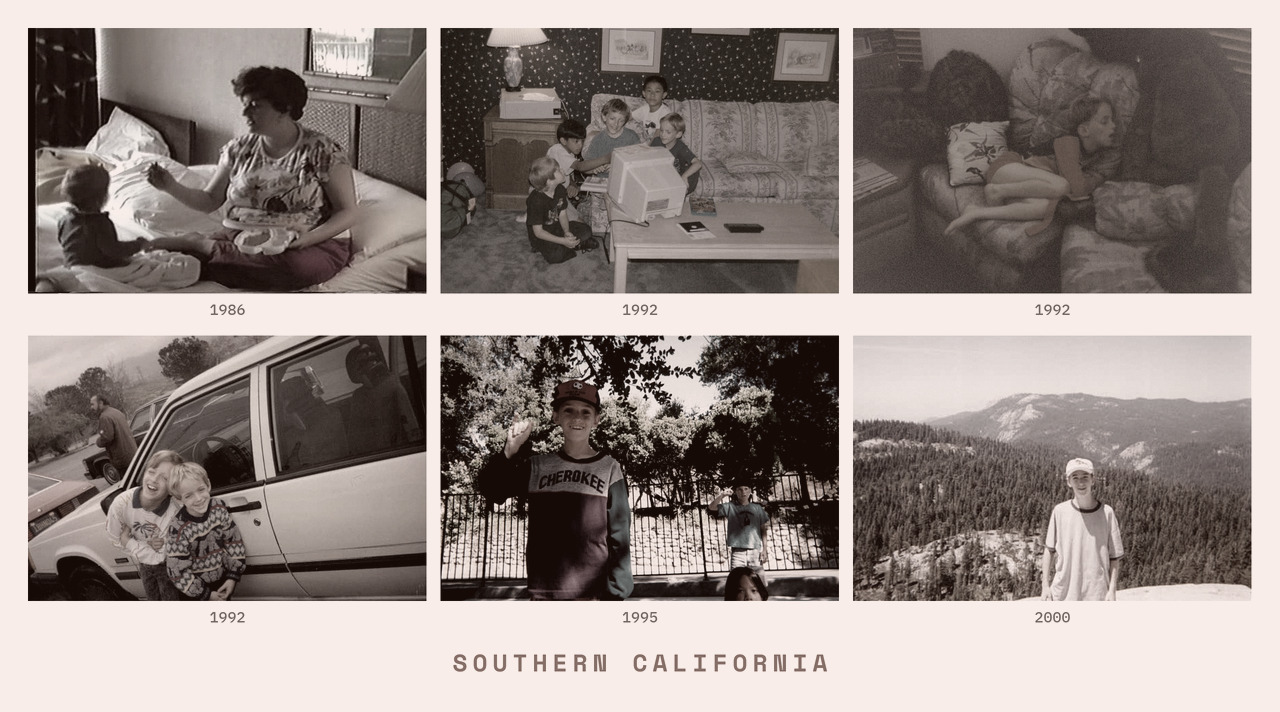
A few months ago I started excavating my own archive. Not to get organized, though it looked that way from the outside. I was excavating because there was a story I could feel somewhere in the material without being able to name it yet.
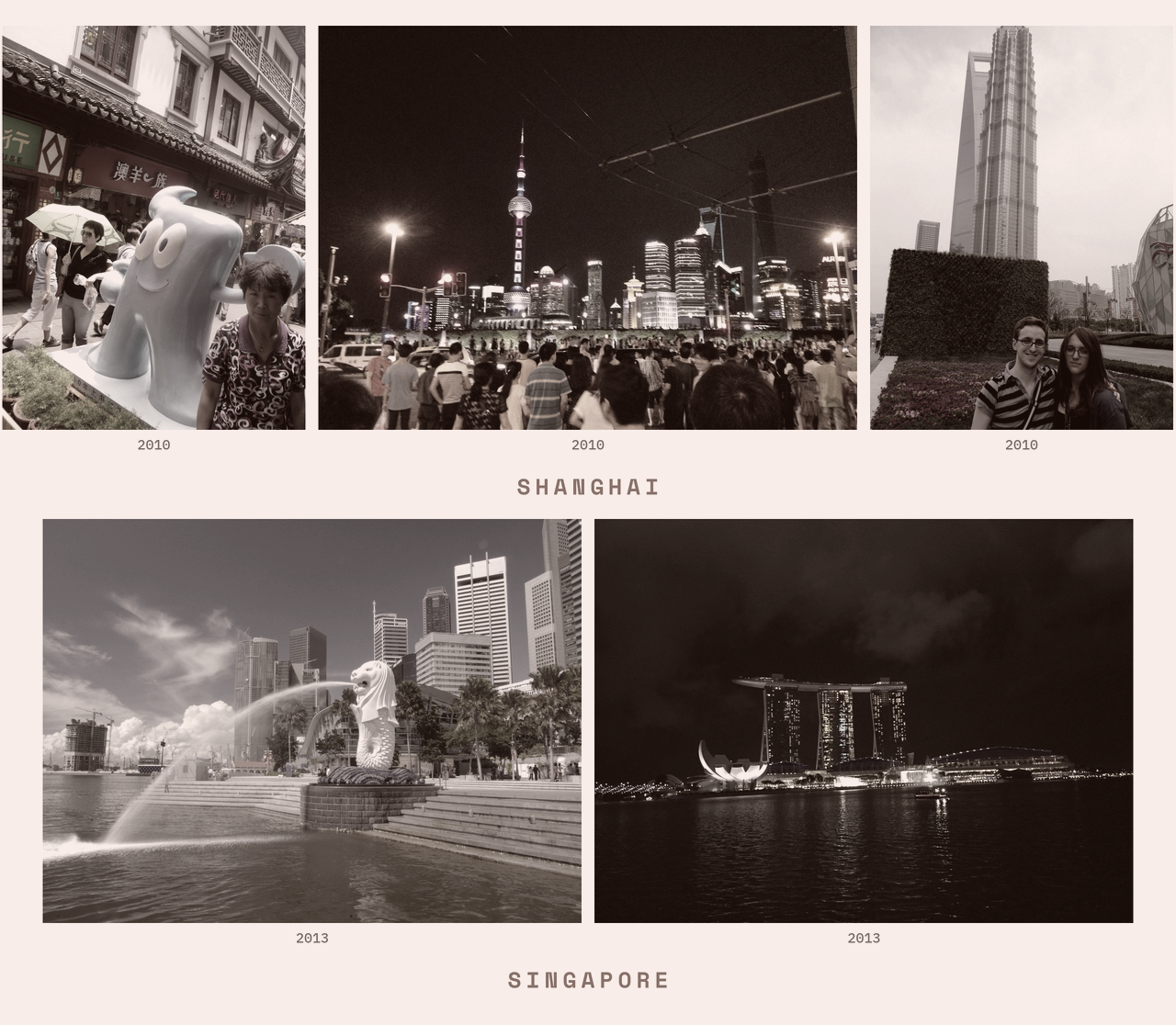
The archive is big. It astonished me what I had stored across a number of external drives, cloud servers, and hard drives of old laptops: more than 100,000 unique photographs, split near evenly across digital and film formats. More than seventy digitized home video tapes (thanks to my mom's diligence across decades). Roughly forty gigabytes of footage, from childhood birthday parties to trips across Asia to scenes I have no memory of at all. Over a hundred audio recordings spanning a decade: late-night asides, casual observations dictated from the back of a steamy Singapore bus. Scanned prints, family documents, genealogy records, and plenty of correspondence I'd never organized.
And still — this is the part I think is most salient — I've got a lot of work ahead of me. Continually indexing, categorizing, titling, refining the archive. That last part matters. “AI helped someone inventory their life” misses what actually happened. I didn't ask AI to take stock of what I had. I asked it to help me find the thing I was already looking for, which turned out to be a different project entirely.
Starting from the story
The project started because of a creative impulse. There's something I want to make. A novel, maybe, or a film, or something I don't have a name for yet. The format is genuinely undecided. But the material. The emotional center of it, the era, the people, the texture of certain years. I could feel all of that before I could see it clearly.
So I worked backward. Instead of asking “what do I have?”, I asked what the story would need in order to function, to breathe. What are the moments that stick out, the voices that echo, the images that form the fabric and tendons of memory? These were much better questions to hold.
An excavation, assisted
For the home videos, I built a searchable dashboard covering all the tapes. For the audio, I ran everything through a transcription pipeline and built an index of recurring threads: people who kept coming up, preoccupations, questions I returned to across different years.
The recordings span a decade: late-night reflections from apartments, ambient captures from cities I was passing through, work meetings that held entire scenes inside them. Travel: Myanmar, Perth, Chennai.
The photographs are in a searchable database I'm continually building, indexing by geography, season, faces, themes, source.
Almost none of the archive is “official” material. A few professional appearances, a couple of TV spots, some documented interviews. Everything else — the texture, the voices, the places I actually lived in — lives in photos, voice memos, half-drafts.
Knowing what's in an archive isn't the same as being able to move through it. Until you can query it, cross-reference it, pull the threads out, the story stays hidden. The tools weren't the point — they were what made the point reachable.
What AI was actually useful for
The useful sessions were the ones where I came in with something specific. “What do these five tapes have in common?” “What places show up most across the audio?” “Help me design a storyboard format that shows both the scene and its potential significance.” The sessions that didn't work were the ones where I was fishing, where I didn't yet have a point of view.
That isn't a criticism of the tool. It's a description of how this kind of work goes. You come in with a hunch, a question, a half-formed instinct. The tool helps you sharpen it, see it from an angle you hadn't considered. But bringing the something is still on you.
How this shapes the work
When I work with clients, the most common mistake I see is leading with format. We need a video, we need a campaign, we need a launch. What they usually mean is: something happened here that matters, and we need people to feel that. That — the something — is what I'm trying to find in the material first. What I've been doing in my own archive is a version of the same practice.
Before a storyboard, before a treatment, before any production calendar, I spend time with what already exists. Footage, transcripts, interview notes, old working documents. Most clients are surprised by how much material is already there — and how rarely any of it has been read in sequence.
The story I came looking for is still mostly unnamed. But the material awaits, and the building is just on the horizon.